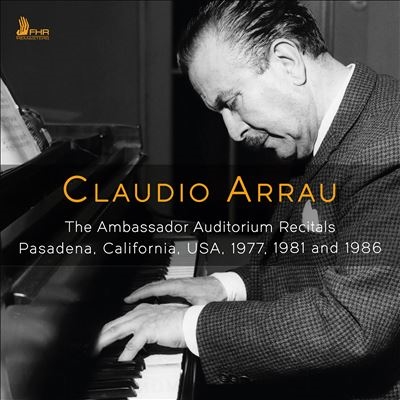
全曲初発売!超貴重アラウのリサイタル5枚組
十八番のベートーヴェン、聴きごたえのリストなど
血の通った凄味が充溢した名演奏揃い
カリフォルニア州パサデナにあるアンバサダー・カレッジのキャンパス内に設けられた1262席の「アンバサダー・オーディトリアム」は、1974年から1995年の間、西海岸の主要なコンサートホールとして約2500のコンサートを開催しました。その中から、名ピアニスト、クラウディオ・アラウの貴重なリサイタル音源をまとめた5枚組が登場します。オープンリールテープから24bit / 96kHzでトランスファー&リマスタリング。アラウの代名詞ベートーヴェンを中心にリスト、ブラームスなどを収録。全曲が初発売という注目の内容です。
クラウディオ・アラウ(1903-1991)はチリに生まれた20世紀を代表する偉大なピアニストの一人。演奏家としての役割に妥協を許さず、偉大な作曲家たちの作品を徹底的に掘り下げ、深い洞察力と強靭な精神力で聴衆に音楽を届けてくれた、比類のない音楽家です。偉大なベートーヴェン解釈者として名声を得、またモーツァルト、シューベルト、ショパン、リスト、シューマン、ブラームス、ドビュッシーにおいても、それに劣らぬみごとな音楽を聴かせました。「解釈者が解釈したものには、解釈者自身の血液が流れていなければならない」とアラウは言っています。彼の演奏はつねに解釈し演奏することを追求して生みだされた、特別な凄味にあふれています。
FIRST HAND RECORDS
発売・販売元 提供資料(2025/03/19)
This recording delivers three live performances by Claudio Arrau, in old age but undiminished in insight and energy, from the Ambassador Auditorium in southern California in the 1970s and 80s. They are spread somewhat awkwardly over five CDs. The recordings were quite well done, on open reel tape, and they have apparently never been released in the past. They make splendid additions to any collection of work by the great pianists of the 20th century, and the album made classical best-seller lists in the summer of 2025. Arrau was in his seventies and eighties when these performances were given, but little diminution of his powers is in evidence; perhaps the 1986 recital has a little less clarity, but the detail in the four Beethoven sonatas on the program is so awe-inspiring that it hardly matters. Indeed, what strikes one is that Arrau, in old age, hardly achieved any kind of Apollonian calm. His Beethoven is restlessly probing, with phrases seeming to begin already amidst a surge of energy, and while his work in the famous sonatas is full of insights, he is perhaps even better in the earlier sonatas, where he seems to delve into Beethovens exploratory mind as it pushes boundaries. Sample the first movement of the Piano Sonata No. 13 in E flat major, Op. 27, No. 1, from the 1981 recital. One striking thing about Arraus career was the degree to which he broke down the distinction between pianists who serve the abstract Germanic musical line and those who favor virtuoso Romantic narrative. He was as good in Liszt as he was in Beethoven, and he infuses Liszts Piano Sonata in B minor with complex structures, making clear why Liszt was the greatest Beethoven interpreter of the middle 19th century. Even in Debussy, he catches an exploratory quality that is at odds with the usual atmospherics but fully convincing. These albums provide well over an evenings worth of deep listening; really, maybe a weeks worth. ~ James Manheim
Rovi